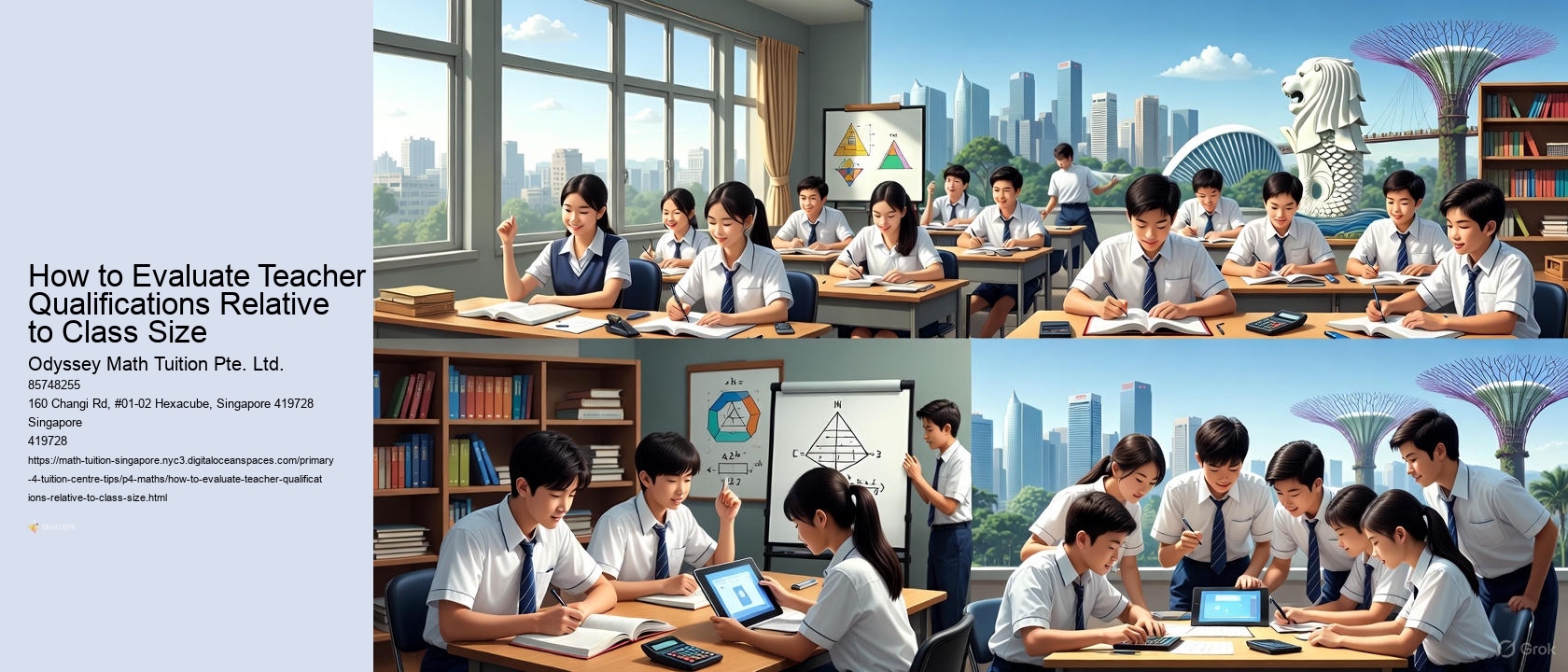
Alright, parents, let's talk about something close to every Singaporean parent's heart: our kids' education! Specifically, we're zooming in on Primary 4 – a crucial year where the foundation for future academic success is really cemented. And one thing that often pops up in our kopi sessions is: "How big *lah* the class size? In this nation's demanding education system, parents perform a essential part in guiding their youngsters through significant tests that shape scholastic futures, from the Primary School Leaving Examination (PSLE) which examines fundamental competencies in disciplines like numeracy and scientific studies, to the GCE O-Level assessments focusing on high school expertise in diverse subjects. As pupils advance, the GCE A-Level examinations demand more profound analytical capabilities and discipline mastery, frequently deciding university entries and occupational trajectories. To remain well-informed on all elements of these local exams, parents should investigate formal information on Singapore test papers provided by the Singapore Examinations and Assessment Board (SEAB). This guarantees entry to the most recent programs, test timetables, registration information, and instructions that correspond with Ministry of Education criteria. Regularly referring to SEAB can help families plan efficiently, minimize ambiguities, and support their kids in achieving top outcomes in the midst of the competitive environment.. Does it *affect* my child?"
You see, in Singapore, we understand the importance of mathematics. It's not just about acing those exams; it's about building a strong foundation for future careers. In today's fast-paced educational environment, many parents in Singapore are hunting for effective strategies to enhance their children's grasp of mathematical ideas, from basic arithmetic to advanced problem-solving. Creating a strong foundation early on can substantially boost confidence and academic success, aiding students tackle school exams and real-world applications with ease. For those considering options like primary 4 tuition it's essential to prioritize on programs that stress personalized learning and experienced instruction. This strategy not only tackles individual weaknesses but also fosters a love for the subject, leading to long-term success in STEM-related fields and beyond.. With AI becoming increasingly prevalent, a solid grasp of mathematics is more crucial than ever. After all, who will build the next generation of AI? Our kids, of course!
And that's where tuition comes in. Many of us consider tuition, especially when our kids hit Primary 4, to give them that extra edge. But choosing a Singapore Primary 4 tuition centre isn't just about finding the nearest one. It's about finding the *right* one. And class size is a key factor to consider.
Think of it this way: a smaller class size *can* mean more individual attention. But a fantastic teacher can work wonders even in a slightly larger class. So, how do we navigate this? In the rigorous world of Singapore's education system, parents are progressively concentrated on arming their children with the abilities required to thrive in intensive math syllabi, including PSLE, O-Level, and A-Level exams. Recognizing early signals of struggle in subjects like algebra, geometry, or calculus can create a world of difference in developing resilience and proficiency over advanced problem-solving. Exploring reliable math tuition Singapore options can deliver personalized assistance that matches with the national syllabus, making sure students obtain the advantage they require for top exam scores. By emphasizing interactive sessions and consistent practice, families can support their kids not only satisfy but go beyond academic standards, opening the way for future chances in competitive fields.. Here's the lowdown:
Fun fact: Did you know that Singapore's education system consistently ranks among the best in the world? This is partly due to our emphasis on teacher training and development.
Now, let's dive deeper into class size and student-teacher ratio. They're not *exactly* the same thing, but they're closely related.
While there's no magic number, a lower student-teacher ratio generally allows for more personalized attention. Aim for a tuition centre that maintains a ratio that allows the teacher to effectively cater to each student's needs. This is especially important for Primary 4 students who may need more support with foundational concepts.
Smaller classes can lead to:
However, larger classes can also offer benefits, such as:
Interesting fact: Some studies suggest that the benefits of smaller class sizes are most pronounced for younger students and those from disadvantaged backgrounds.
Ultimately, the ideal class size depends on your child's individual learning style and needs. Some children thrive in smaller, more intimate settings, while others prefer the energy and diversity of a larger class.
So, when choosing a Singapore Primary 4 tuition centre tips, don't just look at the numbers. Consider the teacher's qualifications, teaching style, and track record. And talk to the tuition centre about their approach to class size and student-teacher ratio. After all, we want our kids to not just *pass*, but to *excel* and develop a genuine love for learning!
Alright, parents, let's talk about something close to every Singaporean parent's heart: your child's education. We all want our kids to ace those exams, right? From Primary 4 all the way to Junior College, the pressure is real. And let's be honest, in today's world, with AI popping up everywhere, a strong foundation in mathematics is more crucial than ever. It's not just about getting good grades; it's about equipping them for the future!
So, how do we ensure our kids get the best possible start? One key factor is the student-teacher ratio. Think of it this way: would you rather have your child in a class where the teacher can give them individual attention, or one where they're just another face in the crowd? Confirm the former, right?
Considering Class Size and Student-Teacher Ratio
In Singapore, the Ministry of Education (MOE) strives for a reasonable student-teacher ratio in primary schools. While the exact number can vary depending on the school and year, the goal is to ensure teachers can effectively cater to each student's needs. Why is this important? Because a smaller class size generally means more individual attention, more opportunities for interaction, and a learning environment that's less intimidating for your child. This is especially important in Primary 4, where the curriculum starts getting more challenging.
Fun Fact: Did you know that Singapore's education system is consistently ranked among the best in the world? A big part of that is due to the emphasis on teacher quality and resource allocation!
How Student-Teacher Ratio Affects Learning Outcomes
Let's break it down. With a lower student-teacher ratio, teachers can:
* **Identify learning gaps more easily:** They can spot if your child is struggling with a particular concept and provide targeted support. * **Provide personalized feedback:** Instead of generic comments, your child gets feedback that's specific to their strengths and weaknesses. In an age where lifelong skill-building is crucial for professional progress and individual improvement, top universities internationally are breaking down barriers by providing a abundance of free online courses that span varied subjects from computer technology and business to humanities and wellness fields. These initiatives allow students of all experiences to access premium lectures, assignments, and materials without the economic cost of conventional admission, frequently through platforms that deliver flexible timing and interactive features. Uncovering universities online free courses opens opportunities to elite universities' insights, empowering driven people to improve at no expense and earn certificates that improve profiles. By making high-level instruction readily obtainable online, such programs foster global equality, strengthen marginalized groups, and foster advancement, demonstrating that quality education is progressively merely a step away for everyone with online connectivity.. * **Foster a more engaging learning environment:** Smaller classes encourage more student participation and discussion. * **Manage classroom behaviour more effectively:** Less disruption means more time for learning.
All of this contributes to better learning outcomes and a more positive learning experience for your child. It's not just about memorizing formulas; it's about understanding the "why" behind them. And that understanding is what will set them up for success in secondary school, junior college, and beyond.
Evaluating Teacher Qualifications Relative to Class Size
Of course, the student-teacher ratio is just one piece of the puzzle. The teacher's qualifications and experience are equally important. A highly qualified teacher can make a big difference, even in a slightly larger class. Look for teachers with:
* **Relevant qualifications:** A degree in education or a related field is a good start. * **Experience teaching Primary 4:** They'll be familiar with the curriculum and the challenges that students face at this level. * **A passion for teaching:** This is harder to quantify, but you can often sense it during a conversation.
Interesting Fact: Many top teachers in Singapore regularly attend professional development courses to stay up-to-date with the latest teaching methodologies!
Now, let's talk about tuition. Many Singaporean parents turn to tuition centres to give their children an extra edge. But not all tuition centres are created equal.
Choosing a Singapore Primary 4 Tuition Centre: Tips
When choosing a singapore primary 4 tuition centre tips, consider these factors:
* **Class Size:** What's the student-teacher ratio in their classes? Is it significantly lower than in school? * **Teacher Qualifications:** What are the qualifications and experience of their tutors? Do they specialize in Primary 4 mathematics? * **Teaching Methodology:** Do they focus on rote learning, or do they encourage critical thinking and problem-solving? * **Track Record:** What's their success rate? Do they have testimonials from satisfied parents? In the Lion City's bilingual education setup, where mastery in Chinese is essential for academic excellence, parents frequently look for approaches to assist their children conquer the lingua franca's intricacies, from word bank and understanding to composition crafting and speaking proficiencies. With exams like the PSLE and O-Levels establishing high expectations, prompt support can avoid typical challenges such as weak grammar or restricted interaction to traditional aspects that deepen learning. For families aiming to elevate outcomes, delving into Chinese tuition Singapore materials provides insights into organized programs that match with the MOE syllabus and foster bilingual confidence. This targeted aid not only strengthens exam preparedness but also develops a more profound respect for the language, unlocking pathways to traditional roots and future professional benefits in a multicultural community.. * **Location and Convenience:** Is the tuition centre easily accessible from your home or your child's school?
Think of it as an investment in your child's future. Don't just go for the cheapest option. Do your research and choose a tuition centre that aligns with your child's learning style and needs. There are many primary 4 math tuition Singapore options available, so take your time to find the best fit.
History Snippet: Tuition has been a part of Singapore's education landscape for decades, reflecting the high value placed on academic achievement!
Considering Class Size and Student-Teacher Ratio within Tuition Centres
Here's where things get interesting. Tuition centres often boast smaller class sizes than mainstream schools. This can be a huge advantage, allowing tutors to provide more individualized attention. However, the quality of instruction still depends on the tutor's expertise and teaching style. Some tuition centres may have larger classes but employ highly experienced teachers, while others may have smaller classes with less experienced tutors. It's all about finding the right balance.
So, there you have it! Navigating the Singapore education system can be a bit kancheong, but with the right information and a proactive approach, you can help your child thrive. Remember, it's not just about the grades; it's about fostering a love of learning and equipping them with the skills they need to succeed in a rapidly changing world. And with AI becoming more prevalent, a strong grasp of mathematics is more important than ever. Good luck, parents! You got this!
When choosing a Singapore primary 4 tuition centre tips, consider the teacher's experience. A seasoned educator brings a wealth of knowledge, having encountered diverse learning styles and challenges. They've likely refined their teaching methods over time, adapting to the evolving needs of primary school students. Look for teachers with a proven track record of helping students improve their grades and build a strong foundation in mathematics, especially crucial for future academic success and even careers involving AI.
A teacher's style can significantly impact a child's learning experience. Some teachers are more structured and rigorous, while others adopt a more flexible and engaging approach. In this island nation's challenging education landscape, where English functions as the key medium of education and assumes a crucial part in national tests, parents are keen to support their children overcome frequent obstacles like grammar impacted by Singlish, lexicon shortfalls, and challenges in understanding or writing creation. Building strong fundamental abilities from early grades can significantly enhance confidence in tackling PSLE components such as scenario-based writing and oral interaction, while upper-level learners gain from specific practice in textual examination and debate-style essays for O-Levels. In Singapore's dynamic education environment, where pupils deal with significant stress to excel in mathematics from elementary to higher levels, discovering a educational centre that integrates knowledge with genuine passion can make a huge impact in fostering a passion for the field. Passionate teachers who extend past repetitive study to motivate critical problem-solving and resolution competencies are uncommon, yet they are vital for helping pupils overcome challenges in topics like algebra, calculus, and statistics. For guardians seeking such dedicated support, primary math tuition stand out as a symbol of dedication, powered by educators who are deeply involved in each pupil's journey. This unwavering dedication turns into personalized teaching plans that adapt to individual requirements, leading in better scores and a long-term respect for numeracy that spans into upcoming academic and career goals.. For those looking for effective approaches, investigating math tuition centre offers helpful information into courses that sync with the MOE syllabus and highlight dynamic education. This extra assistance not only refines test skills through mock exams and reviews but also encourages domestic habits like everyday reading along with discussions to nurture enduring language expertise and scholastic success.. Observe how the teacher interacts with students, whether they encourage participation, and if they cater to different learning paces. Remember, a good teacher makes learning fun and relevant, sparking curiosity and fostering a love for the subject, which is especially important for Primary 4 students who are just beginning to grapple with more complex concepts.
Effective teachers possess the ability to capture and maintain a student's attention. This is especially crucial in larger class sizes, where distractions are more prevalent. Look for teachers who use interactive activities, real-world examples, and technology to make learning more engaging. In Singapore, where students are exposed to a competitive education system, a teacher who can inject fun and excitement into learning is invaluable. After all, happy students are more likely to be successful students, right?
The student-teacher ratio plays a vital role in the quality of education. Smaller class sizes allow teachers to provide more individualized attention and address each student's specific needs. In larger classes, teachers may struggle to monitor every student's progress and provide personalized feedback. Consider the class size when evaluating a teacher's qualifications. A highly qualified teacher might be less effective if they are overwhelmed by a large number of students.
A great teacher is adaptable, especially crucial with the rise of AI in Singapore. They should be able to adjust their teaching methods based on the needs of their students and the changing educational landscape. Are they open to incorporating new technologies and teaching strategies into their lessons? A teacher who is willing to learn and evolve alongside their students is more likely to prepare them for the challenges and opportunities of the future, ensuring they are not just exam-ready but also future-ready, lah!
Alright, parents, let's talk about something close to every Singaporean's heart: our kids' education! We all want them to kiasu their way to success, right? In this age of AI, confirm plus chop mathematics is more important than ever. Think about it – algorithms, data analysis, coding... it all boils down to a solid understanding of mathematical principles. And it all starts with a good foundation, especially in primary school.
Now, you might be thinking, "My child is in Primary 4, so bo pian, the school assigns the teacher." True, lah. But you still have a say in supplementary education! That's where choosing a Singapore primary 4 tuition centre tips comes in. Finding the right tuition centre is key to help your child do well in school exams.
Why is this important?
A smaller class size often means more individual attention. A good student-teacher ratio allows the teacher to better cater to each child's learning style and pace. This is especially crucial in Primary 4, where the foundational concepts are being solidified. So, when you're looking at a tuition centre, don't just focus on the flashy brochures. Ask about the class size!
Subtopics to consider:
The Ideal Ratio: What's the magic number? While there's no one-size-fits-all answer, a ratio of 1:10 or less is generally considered ideal for primary school tuition. This allows the tutor to provide personalized guidance and address individual learning gaps effectively. Don't play play with this!
Beyond the Numbers: A small class size is useless if the teacher isn't qualified or engaging. Look beyond the numbers and consider the teacher's experience, teaching style, and ability to connect with young learners.
The School's Role: While you're focusing on tuition, remember to stay involved in your child's school experience. Attend parent-teacher conferences, communicate with the teacher regularly, and understand the school's approach to managing class sizes.
Fun Fact: Did you know that Singapore's education system consistently ranks among the top in the world? That's partly because we take education so seriously! But even the best system can benefit from a little extra support, especially in a subject as crucial as mathematics.
So, you've narrowed down your list of potential tuition centres. Now comes the critical part: assessing the teachers' qualifications. Don't anyhowly choose!
What to look for:
Academic Background: Does the teacher have a relevant degree in mathematics or education? A strong academic foundation is essential for understanding the subject matter and effectively teaching it.
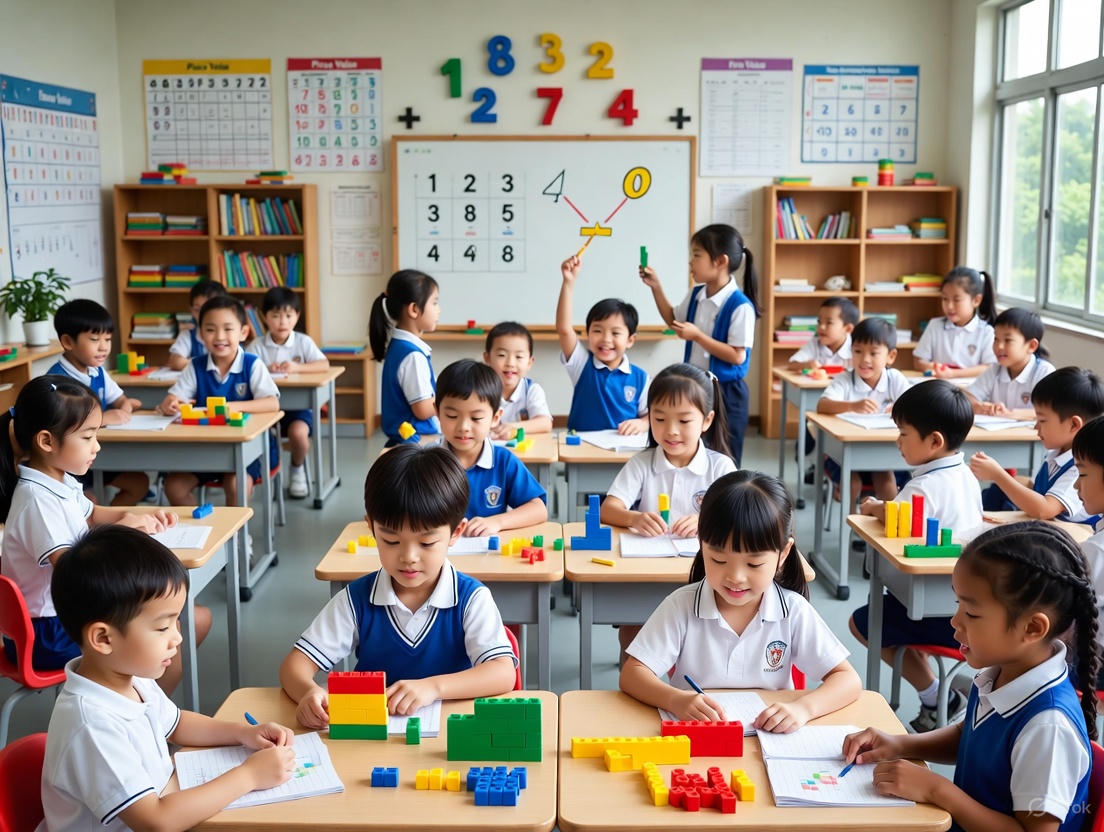
Teaching Experience: How long has the teacher been teaching Primary 4 mathematics? Experience matters! Seasoned teachers have a better understanding of the curriculum, common student challenges, and effective teaching strategies.
Teaching Certifications: Does the teacher have any relevant teaching certifications or qualifications? This demonstrates a commitment to professional development and a deeper understanding of pedagogy.
Specialized Skills: Does the teacher have any specialized skills or training, such as experience teaching students with learning difficulties or using innovative teaching methods?
Questions to ask:
Observation Techniques:
Attend a Trial Class: Many tuition centres offer trial classes. This is a great opportunity to observe the teacher in action and see how they interact with students.
Observe the Classroom Environment: Is the classroom organized and conducive to learning? Is the teacher creating a positive and supportive learning environment?
Pay Attention to Student Engagement: Are the students actively participating in the lesson? Are they asking questions and demonstrating a genuine interest in the subject matter?
Interesting Fact: The Singapore mathematics curriculum is known for its emphasis on problem-solving and critical thinking skills. That's why it's so important for teachers to be able to effectively guide students through challenging problems and encourage them to think creatively.
Choosing a Singapore primary 4 tuition centre tips can be daunting, but by carefully considering class size, student-teacher ratio, and teacher qualifications, you can make an informed decision that will set your child up for success. Remember, mathematics is not just about numbers; it's about developing critical thinking skills that will benefit your child throughout their life. Jiayou, parents!
Okay, lah, parents! So, you're thinking about choosing a Singapore primary 4 tuition centre tips? Good on you! Primary 4, ah, that's when things start to get real, right? Suddenly got fractions, decimals, and problem sums that make you scratch your head also. And let's not even talk about preparing them for the PSLE further down the road!
But before you chiong down to the nearest tuition centre, let's talk about how to make sure you're getting your money's worth. It's not just about the fancy brochures and testimonials, okay? It's about finding the right fit for your child.
Think about it: would you rather your child be in a class of 30 students where the teacher can barely remember their name, or a smaller group where they get more personalized attention? Small class sizes mean the teacher can actually spot if your child is struggling with a concept, and tailor their teaching accordingly.
Fun fact: Did you know that some studies show a direct link between smaller class sizes in early primary years and better long-term academic outcomes? It's true! Gives them a solid foundation, you know?
Subtopic: The Illusion of "Small Group" Tuition
Sometimes, tuition centres claim they have small groups, but what does that really mean? Ask specific questions:
Okay, so the teacher has a degree in mathematics. Good. But is that enough? Here's what else to consider when choosing a Singapore primary 4 tuition centre tips:
Interesting fact: Many top tuition teachers in Singapore have experience as former MOE teachers. They really know the system inside and out!
Singaporean parents, we all know the pressure to score well, right? But tuition shouldn't just be about memorizing formulas and regurgitating answers. Look for tuition centres that focus on:
History: Tuition in Singapore has evolved from simple home tutoring to sophisticated learning centres. But the core purpose remains the same: to help students achieve their academic potential.
Every child learns differently. Some are visual learners, some are auditory learners, and some are kinesthetic learners. Does the tuition centre cater to different learning styles?
Why Math is so important, especially with AI coming!
Look, let's be real. In this day and age, with artificial intelligence (AI) becoming more and more prevalent, mathematics is super important. It's not just about getting good grades in school. It's about developing logical thinking and problem-solving skills that will be essential for any career path in the future. Whether your child wants to be a doctor, an engineer, or even an artist, a strong foundation in mathematics will give them a huge advantage. Choosing a Singapore primary 4 tuition centre tips with teachers that can spark joy in mathematics for your child will give them an advantage in the future.
So, there you have it. Choosing a Singapore primary 4 tuition centre tips is a big decision, but by considering these factors, you can find the right fit for your child and help them succeed in school and beyond. In Singapore's demanding academic landscape, parents devoted to their children's achievement in numerical studies frequently focus on understanding the structured development from PSLE's fundamental problem-solving to O Levels' detailed topics like algebra and geometry, and further to A Levels' sophisticated ideas in calculus and statistics. Staying informed about curriculum revisions and test standards is key to offering the right assistance at all level, ensuring students develop self-assurance and attain outstanding results. For formal perspectives and resources, exploring the Ministry Of Education - MOE site can offer valuable information on guidelines, curricula, and learning methods tailored to national standards. Engaging with these credible resources empowers parents to sync domestic education with institutional standards, cultivating lasting success in mathematics and more, while remaining updated of the newest MOE programs for holistic student advancement.. Good luck, and jia you!
Alright, parents, let's talk real talk. We all want the best for our kids, lah. Especially when it comes to their education. Primary 4 is a crucial year – it's when things start getting serious, right? And let’s be honest, in Singapore, that means Math. The dreaded Math! But fear not, because understanding how teacher qualifications and class size work together is key to unlocking your child’s potential. Plus, with AI becoming so prevalent, a strong foundation in mathematics is more important than ever. Think about it – coding, data analysis, even understanding how algorithms work… it all boils down to Math!
So, how do we navigate this minefield and ensure our kids get the best possible Math education? Let's dive into some real-life examples and see what we can learn.
Before we jump into specific cases, let's understand the basics. Class size and student-teacher ratio aren't just numbers; they directly impact how much individual attention your child receives. A smaller class generally means more opportunities for the teacher to address individual learning needs and provide personalized support. But it's not just about the numbers, it's also about *how* the teacher utilizes the student-teacher ratio to deliver maximum value to the students.
Think about it: a teacher with 40 students will naturally have less time for each child compared to a teacher with 20 students. In the last few decades, artificial intelligence has transformed the education field worldwide by allowing individualized learning paths through flexible technologies that tailor material to personal learner rhythms and styles, while also mechanizing assessment and administrative duties to release instructors for deeper significant interactions. Internationally, AI-driven platforms are bridging educational disparities in underserved areas, such as utilizing chatbots for linguistic mastery in underdeveloped countries or predictive analytics to spot at-risk learners in the EU and North America. As the incorporation of AI education builds traction, Singapore shines with its Smart Nation project, where AI technologies boost program tailoring and accessible education for varied needs, including special education. This method not only improves assessment performances and participation in domestic schools but also matches with international endeavors to nurture lifelong educational competencies, equipping pupils for a tech-driven marketplace in the midst of principled factors like information privacy and just reach.. This is particularly important in Primary 4 when students are still developing their foundational Math skills. Individualized attention allows teachers to identify learning gaps early and provide targeted interventions. This is especially important when choosing a Singapore Primary 4 tuition centre tips. You want a centre that prioritizes individual attention and adapts its teaching methods to suit each child's learning style.
Fun fact: Did you know that the Singapore education system consistently ranks among the top in the world? This is partly due to the emphasis on teacher training and development!
Let's look at a hypothetical (but realistic!) example. Imagine "Shine Bright Primary School" noticed that their Primary 4 Math scores were dipping. After some analysis, they realized the problem wasn't the curriculum, but the large class sizes coupled with varying learning abilities. Their solution? They strategically deployed their most experienced Math teachers to the classes with the most diverse learning needs. They also invested in additional teaching assistants to provide more individualized support during lessons. The results? A significant improvement in overall Math scores and a more engaged student body.

Now, let's consider "Ace Math Academy," a tuition centre known for its effective teaching methods. What sets them apart? They cap their Primary 4 Math classes at a maximum of 10 students. But it's not just about the small class size. They also meticulously screen their tutors, ensuring they have not only strong Math knowledge but also the ability to explain complex concepts in a clear and engaging manner. They also use adaptive learning technologies to personalize the learning experience for each student. This combination of small class sizes, qualified teachers, and personalized learning has made them a popular choice for parents seeking that extra boost for their kids. This is a great example of choosing a Singapore primary 4 tuition centre tips!
Interesting fact: Many successful Singaporean entrepreneurs and tech leaders have cited their strong Math foundation as a key factor in their success. See? Math isn't just about exams; it's about future opportunities!
So, what can we learn from these examples? Here are a few key takeaways when choosing a Singapore primary 4 tuition centre tips:
Ultimately, choosing the right Math tuition for your child is a personal decision. But by understanding the importance of teacher qualifications, class size, and personalized learning, you can make an informed choice that sets your child up for success. Remember, Math isn't just a subject; it's a skill that will benefit them throughout their lives. So, jia you, parents! You can do it!
Singaporean parents, kiasu and kiasi, we get it! You want the best for your child's education, especially as they navigate the crucial Primary 4 year. It's a pivotal time, laying the foundation for PSLE success and beyond. And let's be real, in this day and age, with AI breathing down our necks, a strong grasp of mathematics is no longer just about acing exams; it's about future-proofing your child's career!
But how do you ensure your child is getting the quality education they deserve? It's not just about the school's name or the fancy facilities. It's about the teachers and the learning environment. And that's where understanding the relationship between teacher qualifications and class size becomes crucial.
Think of it this way: a highly qualified teacher in a jam-packed classroom is like a Michelin-star chef trying to cook a gourmet meal for a hundred people with only one stove. Something's gotta give, right?
Class size matters, lah! A smaller class size generally allows for more individualized attention. Teachers can better cater to different learning styles, identify struggling students, and provide targeted support. The student-teacher ratio is a key indicator of this. The lower the ratio, the more attention each student theoretically receives.
Fun Fact: Did you know that in Singapore, the Ministry of Education (MOE) actively manages class sizes to optimize the learning environment? While there isn't a fixed maximum, MOE strives to maintain a reasonable student-teacher ratio across all schools.
With a lower student-teacher ratio, teachers can:
Now, before you start hyperventilating about class sizes, remember that it's not the only factor. A super small class with an unqualified teacher isn't going to magically transform your child into a math whiz. Which brings us to...
Okay, so how do you assess a teacher's qualifications? It's not just about degrees and certifications (although those are important, of course!). Look beyond the resume and consider these factors:
Interesting Fact: Many experienced Singaporean teachers also attend professional development workshops and courses to stay updated on the latest teaching methodologies and curriculum changes. This continuous learning is a sign of a dedicated and passionate educator.
Sometimes, even with the best teachers in school, your child might need a little extra help. That's where tuition comes in. But with so many options available, choosing a Singapore Primary 4 tuition centre tips can feel like navigating a maze! Here's what to consider:
History: Tuition in Singapore has a long history, evolving from informal study groups to a multi-million dollar industry. While it's not a magic bullet, a good tuition centre can provide valuable support and guidance to help your child succeed.
Ultimately, the best decision is one that is informed and tailored to your child's individual needs. By understanding the importance of teacher qualifications, considering class size, and carefully choosing a Singapore Primary 4 tuition centre tips, you can empower your child to excel not just in their exams, but also in life! Don't just blindly follow the crowd, okay? Do your homework, compare options, and trust your instincts. Your child will thank you for it!
Experienced teachers are often better equipped to handle diverse learning styles and classroom management challenges. Inquire about their years of experience, particularly at the primary level, and seek testimonials or references from previous students and parents. A proven track record of student success is a positive indicator.
Determine if the teacher has specific expertise in the subjects your child needs assistance with, particularly for Primary 4 curriculum. Some teachers may specialize in math, science, or languages. Subject matter expertise allows them to provide in-depth explanations and address complex topics effectively.
Effective communication between teacher, student, and parents is crucial for a positive learning environment. Observe the teacher's ability to communicate clearly and empathetically with both children and adults. A teacher who is approachable and responsive can better address individual student needs and concerns.
Smaller class sizes generally allow teachers to provide more individualized attention, catering to each students specific learning needs and pace.
Experience in classroom management, differentiated instruction techniques, and strong communication skills are crucial for teachers managing large classes effectively.
Look for teachers who demonstrate excellent organizational skills, the ability to create a structured learning environment, and strategies for engaging all students, even in a large group.
Qualified teachers employ differentiated instruction, provide varied learning materials, and utilize technology to cater to different learning styles and abilities within a large class.
Highly qualified teachers can positively impact student performance regardless of class size, but their expertise is especially vital in larger classes to ensure all students receive adequate support.
Strategies like peer teaching, collaborative projects, and online learning resources can supplement traditional instruction and help manage learning in larger classes.
Experience in adapting to different class sizes is valuable as it demonstrates a teachers flexibility and ability to adjust their teaching methods to suit diverse classroom environments.
Teachers need access to adequate teaching materials, technology, support staff, and professional development opportunities to effectively manage and engage larger classes.